DIY Business Diagnosis vs Professional Consulting: Which One Do You Need?
You know something isn’t working in your business. The question isn’t whether to fix it, it’s how.
Maybe revenue has plateaued. Maybe you’re working harder than ever but not seeing results. Or maybe you just have a quiet, persistent feeling that your business isn’t running the way it should.
Whatever brought you here, you’re likely weighing the same question many small business owners wrestle with: Can I figure this out myself, or do I need outside help?
This article gives you an honest answer, not a pitch, not a one-size-fits-all prescription. Just a clear breakdown of your real options so you can choose the path that actually fits where you are right now.
What Is a Business Diagnosis, Anyway?
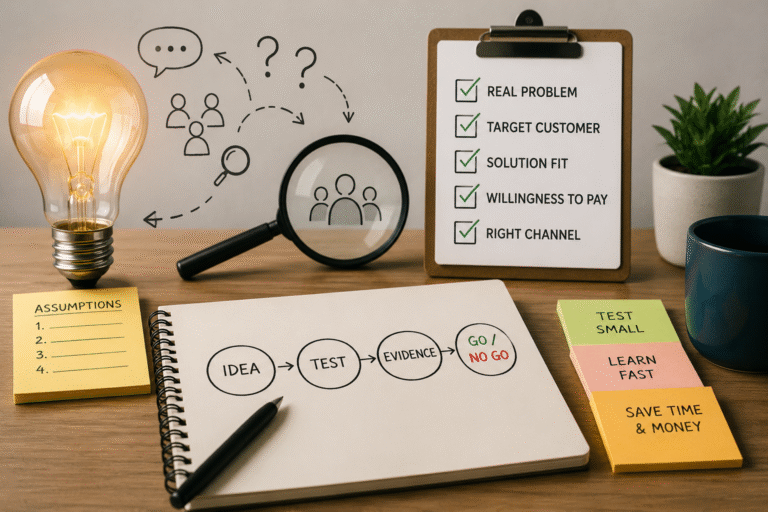
A business diagnosis is the process of identifying what’s preventing your business from growing, running smoothly, or reaching its potential.
Think of it like a health check-up. You’re not just asking “what’s wrong?”, you’re asking where the problem lives, why it’s happening, and what to do about it.
A diagnosis might reveal:
- A pricing structure that’s quietly killing your margins
- A marketing message that attracts the wrong clients
- A workflow bottleneck that’s capping your capacity
- A product-market misalignment you’ve been papering over with effort
Without a proper diagnosis, most business owners end up treating symptoms instead of causes. They launch a new offer when the real problem is positioning. They hire help when the real problem is a broken process. They double down on marketing when the real problem is conversion.
The Three Real Options You Have
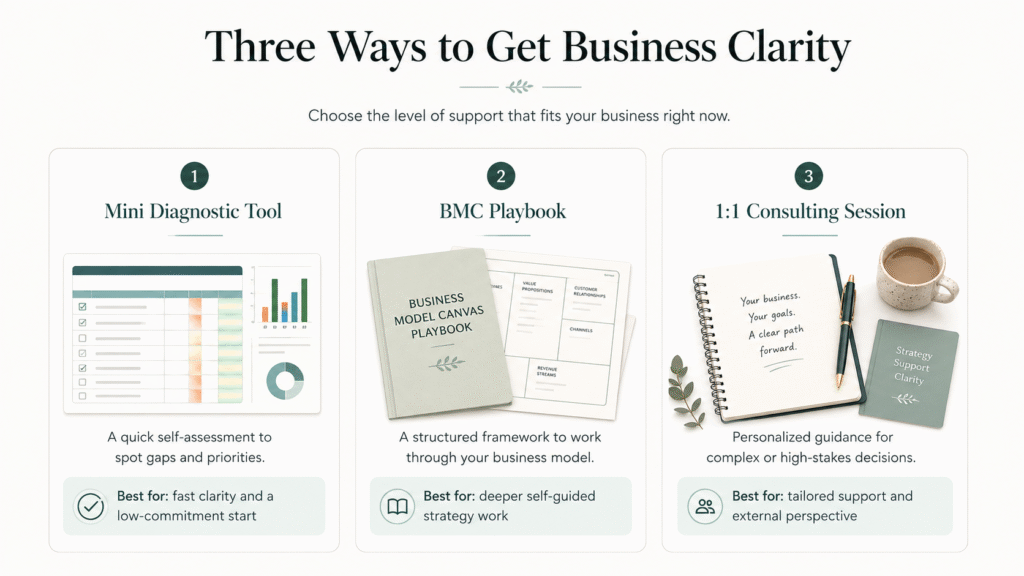
When it comes to diagnosing and fixing your business, there are three legitimate paths. Each one has a place, the key is knowing which one you actually need.
Option 1: The DIY Self-Assessment
Best for: Business owners who are clear-headed, analytical, and want a fast, affordable starting point.
A structured self-assessment tool walks you through targeted questions about your business model, revenue, operations, clients, and goals. The output is a snapshot of what’s working and what isn’t, based on your own honest answers.
The value here is speed and cost. You can complete a well-designed diagnostic in under 30 minutes and walk away with a clearer picture of your business than you had before.
The limitation? You can only see what you already know. A self-assessment reflects your own understanding of your business. If your blind spots are deep — and most business owners have them, a self-assessment may give you reassurance when you actually need a challenge.
This is the right path if:
- You’re in early-stage and just need clarity on your foundations
- You want a quick audit before a bigger decision
- You’re on a tight budget and need a starting point
- You’re already somewhat analytical and enjoy structured thinking
This is NOT the right path if:
- You’ve tried to diagnose the problem yourself and keep going in circles
- You’ve been in the same stuck place for more than 6–12 months
- Every solution you try creates a new problem
Option 2: A Structured Business Framework (Playbook)
Best for: Business owners who know their fundamentals but need a proven system to apply them.
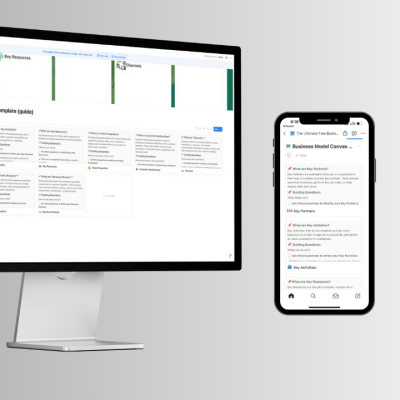
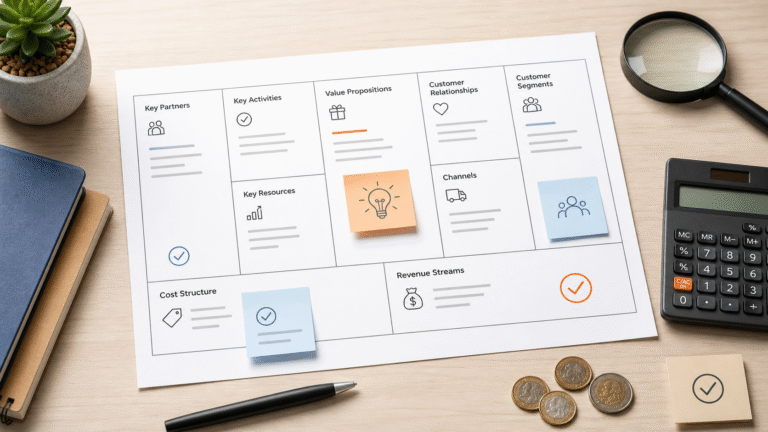
A business playbook takes you beyond surface-level questions. It gives you a framework, a structured way of thinking about your business model, your customer, your value proposition, and your operations, and then helps you work through each component deliberately.
The advantage of a high-quality playbook over a basic checklist is depth. It doesn’t just ask “Is your marketing working?” it walks you through why it might not be, and what to do about it.
The limitation is still the same as any self-guided resource: you’re still the one doing the analysis. A playbook can’t tell you that your assumptions are wrong. It can’t push back on your reasoning. It can’t see what you’re not showing it.
This is the right path if:
- You’ve done basic self-assessment and want to go deeper
- You learn well from structured frameworks and like working at your own pace
- You want a repeatable system you can use again as your business evolves
- You’re not ready for 1:1 consulting but want more than a quiz
Option 3: Working With a Business Consultant
Best for: Business owners who are seriously stuck, scaling, or making a major decision that has real financial or operational risk.
A skilled business consultant doesn’t just ask you the same questions a tool would. They listen to what you don’t say. They spot the pattern in your answers. They challenge assumptions you’ve held for years without realizing they’re assumptions.
More importantly, a consultant brings external perspective. When you’re inside the bottle, you can’t read the label. Someone who has worked with dozens of businesses across industries can often see your problem clearly within the first conversation, not because they’re smarter than you, but because they’re outside it.
The value isn’t information. It’s clarity. And clarity, when you’re stuck, is worth more than almost any other business investment you can make.
The limitation? It requires investment, of money, of time, and of honesty. A consulting session is only as valuable as your willingness to hear hard truths and act on them.
This is the right path if:
- You’ve been stuck for a while and self-guided attempts haven’t moved the needle
- You’re about to make a significant decision (new offer, new market, new hire) and want strategic input
- You want someone to look at your whole business picture and give you honest feedback
- You’re done with generic advice and ready for something specific to your situation
The Honest Comparison
Here’s a straightforward breakdown to help you decide:
| Mini Diagnostic Tool | BMC Playbook | 1:1 Consulting Session | |
|---|---|---|---|
| Time required | 20–30 minutes | A few hours over 1–2 weeks | 1 focused session |
| Depth of insight | Surface to moderate | Moderate to deep | Deep and specific |
| Personalization | Based on your own answers | Framework-guided | Fully personalized |
| External challenge | None | None | High |
| Best for | Quick audit / starting point | Structured self-work | Clarity on complex problems |
| Investment | Low | Medium | Higher |
The Most Common Mistake: Choosing Based on Price, Not Fit
Here’s what I see often: business owners choose the cheapest option first, spend weeks working through it, still feel unclear, then book a consulting session, which is what they needed from the start.
I’m not saying the cheaper options aren’t valuable. They genuinely are, in the right context. But if you’re reading this article and you’ve been stuck for more than a year, the problem probably isn’t that you haven’t found the right template. The problem is that you need someone to look at your specific situation and tell you what they actually see.
Choosing the wrong tool doesn’t save money, it costs time, and in business, time is the most expensive thing you have.
How to Know Which One You Actually Need Right Now
Ask yourself these three questions honestly:
1. Have you already tried to diagnose this problem on your own? If yes, and you’re still unclear, move up. A tool won’t give you what another self-guided attempt couldn’t.
2. Is this a general confusion or a specific, high-stakes problem? General confusion → start with the diagnostic tool or playbook. Specific, high-stakes problem (launching something new, revenue declining, a major pivot) → go straight to consulting.
3. How long have you been in this place? A few months: a structured tool or playbook may be enough. Six months to a year or more: the investment in a proper consulting session will almost certainly pay for itself in clarity and redirected energy.
Where to Start
If you’re still figuring out where you land, here’s a practical starting point:
- Start with the Business Clarity Mini Diagnostic Tool — a structured self-assessment designed to surface the real patterns in your business quickly. It’s the lowest-commitment way to get clarity fast.
- Go deeper with the BMC Playbook — if you want a framework to work through your full business model systematically, this is built for exactly that.
- Book a Business Clarity & Strategy Session — if you want one focused conversation that gives you a clear picture of what’s holding your business back and what to do about it. This is for business owners who are done guessing and ready for specific answers.
There’s no wrong starting point, only the starting point that matches where you actually are.
Frequently Asked Questions
Can a $5 tool really help my business?
Yes, if your problem is a lack of structure and clarity, and you’re willing to answer honestly. A well-designed diagnostic tool can surface patterns you hadn’t consciously connected. The limitation is that it reflects your own understanding, not an external perspective.
Is business consulting worth it for a small business?
For the right situation, absolutely. If you’ve been stuck in the same place for months, or if you’re about to make a decision with real financial risk, the cost of clarity is almost always lower than the cost of continuing without it.
How is a consulting session different from just reading business advice online?
Generic advice is written for everyone, which means it’s perfectly tailored for no one. A consulting session is based on your specific business, your specific context, and the specific patterns someone trained to notice them can see in your situation.
What if I’m not sure what my problem even is?
That’s exactly what a diagnosis is for, whether you use a tool or a session. Not knowing what the problem is doesn’t disqualify you from getting help. It’s the most common starting point.
The Bottom Line
DIY tools and playbooks are valuable when you need structure and a starting point. Professional consulting is valuable when you need external perspective and specific answers.
The question isn’t which option is better, it’s which one fits your situation right now.
If you’re not sure, the safest and lowest-risk move is to start with the Mini Diagnostic Tool. It takes less than 30 minutes and gives you something concrete to work with, whether you continue on your own or decide to take the next step.