How to Validate a Business Idea Using the Business Model Canvas
Before You Spend a Dollar, Read This
Here’s the short answer: you can validate a business idea quickly, cheaply, and without a business degree, using a one-page tool called the Business Model Canvas (BMC).
Most people skip validation. They fall in love with their idea, build something, then launch, and hear silence. No sales. No feedback. Just a product the market wasn’t waiting for.
The good news? You don’t have to guess. You just have to ask the right questions before you build.
In this article, I’ll show you exactly how to use the Business Model Canvas to validate your business idea, step by step, so you can move forward with confidence, not just hope.
Why Validating Your Business Idea Matters More Than Your Idea Itself
Ideas are free. Execution is expensive. And the biggest mistake I see small business owners make, whether they’re launching a coaching service, a product, or a local business, is skipping the validation stage entirely.
Here’s what happens when you skip it:
- You spend months building something nobody asked for.
- You invest money into branding, a website, or inventory before knowing if there’s demand.
- You burn out before you even launch, or worse, right after.
Validation isn’t about killing your idea. It’s about testing your assumptions before the market does.
A 2019 CB Insights study found that 35% of startups fail because there’s no market need for their product or service. Not because of bad execution. Not because of lack of funding. Because nobody wanted what they built.
You can avoid that, and the Business Model Canvas is one of the simplest tools to help you do it.
What Is the Business Model Canvas (And Why It Works for Validation)?
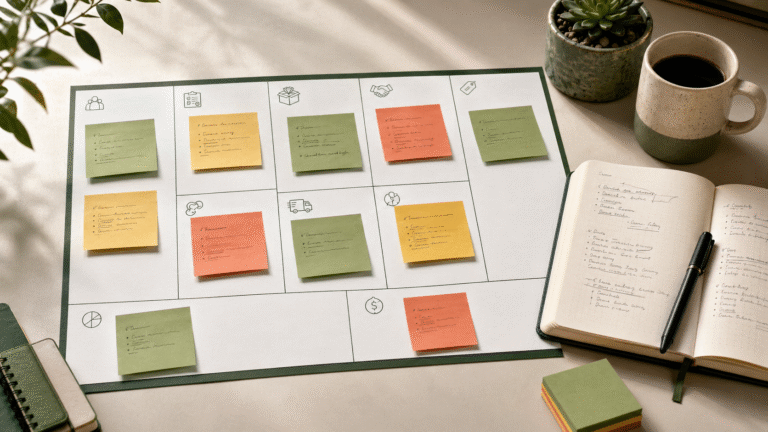
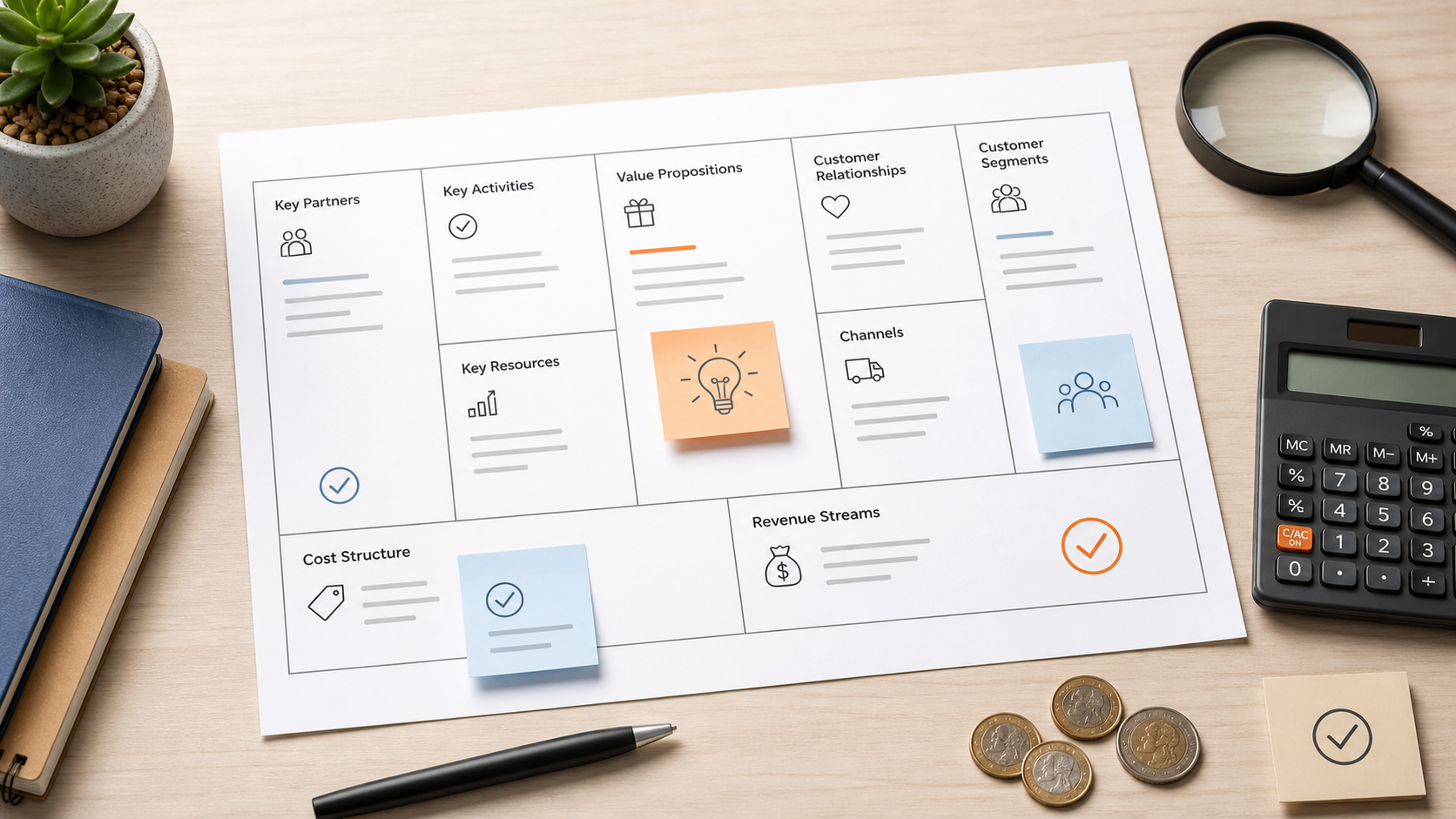
The Business Model Canvas is a one-page strategic framework developed by Alexander Osterwalder. It maps out nine key elements of any business:
- Customer Segments: Who are you serving?
- Value Propositions: What problem are you solving, and why should they choose you?
- Channels: How will you reach your customers?
- Customer Relationships: How will you attract and keep them?
- Revenue Streams: How will you make money?
- Key Resources: What do you need to deliver your value?
- Key Activities: What must you do consistently?
- Key Partnerships: Who can help you?
- Cost Structure: What will this cost you?
Most people use the BMC to plan a business. But here’s how I use it with my clients: as a validation map.
Every box in the canvas is an assumption. And every assumption needs to be tested before you invest.
Step-by-Step: How to Validate a Business Idea Using the BMC
Step 1: Fill In the Canvas With Your Assumptions (Don’t Skip This)
Before you do any research, sit down and fill out the full BMC based on what you think is true. Who do you think your customer is? What do you think they’ll pay? How do you think you’ll reach them?
Write it all down, even the guesses. Especially the guesses.
Why? Because the gaps and the guesses are where the risk lives. This is your starting validation map.
Pro tip: Use sticky notes or a digital tool so you can move things around easily as you learn more.
Step 2: Identify Your Riskiest Assumptions
Not all assumptions are equal. Some, if wrong, will only cause minor problems. Others, if wrong, will sink the entire business.
Look at your canvas and ask: “Which of these, if wrong, would mean this business cannot work?”
Usually, the riskiest assumptions are in Customer Segments and Value Propositions:
- Does this customer actually exist in the numbers I need?
- Does this person actually experience the problem I think they have?
- Would they pay to solve it?
Circle or highlight those high-risk boxes. These are where you’ll focus your validation effort first.
Not sure which assumptions to write down first?
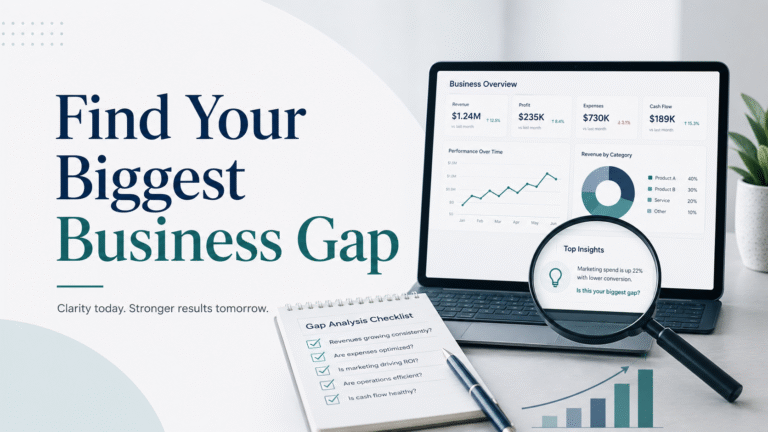
I created a free Idea Validation Checklist that maps out every assumption
you need to test, organized by BMC section. Download it and use it
alongside your canvas.

👉 [Get the free checklist →]
Step 3: Design Small, Fast Experiments
Now here’s where it gets practical. For each risky assumption, design the simplest possible test to find out if you’re right.
You don’t need a finished product to validate. You need evidence.
Here are some low-cost validation methods:
| Assumption to Test | Simple Experiment |
|---|---|
| People have this problem | 10–15 interviews with target customers |
| They would pay for a solution | Pre-sell before building; ask for a deposit |
| This channel will reach them | Run a small paid ad or post organically and measure |
| My price point works | Present 3 price options and observe their reaction |
| This partnership is available | Send 5 partnership outreach emails and track responses |
The goal isn’t perfect data. The goal is directional evidence, enough to know whether to move forward, pivot, or stop.
Step 4: Talk to Real People (Not Just Your Friends)
This is the step most people rush or skip entirely. Customer interviews are the fastest, cheapest, and most underused validation tool available.
Talk to 10–15 people who match your target customer profile. Not your friends. Not your family. Real strangers who represent your market.
Ask them:
- “What’s the hardest part about [the problem you’re solving]?”
- “What have you already tried to solve it?”
- “How much time or money does this problem cost you?”
Notice: you’re not pitching your idea. You’re listening to their reality. The goal is to understand whether your assumptions about their pain match what they actually experience.
If seven out of ten people say “that’s not really a problem for me”, that’s valuable data. It means you either have the wrong customer, the wrong problem, or both.
Step 5: Update Your Canvas Based on What You Learned
After your experiments and interviews, go back to your BMC and update it.
This is where most entrepreneurs have a breakthrough, or a necessary pivot. You’ll find that some assumptions were spot-on. Others need to change. A few might get scrapped entirely.
That’s not failure. That’s validation working exactly as it should.
A refined canvas after real-world testing is far more valuable than a perfect-looking canvas built only on assumptions.
A Simple Example: How Validation Changes Everything
Let me share a pattern I see often with the business owners I work with.
Imagine someone who wants to launch an online course teaching productivity to freelancers. They assume:
- Freelancers are overwhelmed and disorganized
- They’ll pay €97 for a course
- Instagram is the best channel to reach them
After 12 customer interviews, they discover:
- Freelancers are overwhelmed, but the real pain is client management, not personal productivity
- €97 feels high for a course; they’d prefer a monthly membership
- Most of them find useful content through YouTube and LinkedIn, not Instagram
None of this invalidates the business. It redirects it. The entrepreneur now builds something the market actually wants, instead of something the market politely ignores.
This is exactly what the BMC, combined with real-world experiments, makes visible.
The Most Common Validation Mistakes (And How to Avoid Them)
1. Validating with people who already like you. Friends and family will say your idea is great. Find strangers who match your target customer.
2. Asking leading questions. “Would you buy this?” is not validation. “How do you currently handle this?” is validation.
3. Confusing interest with intent. “I’d love that!” is not a sale. A pre-order, a deposit, or a signed waitlist is closer to real validation.
4. Moving too fast past the canvas. Every box is an assumption. Every assumption is a risk. Take the time to map them all.
5. Doing only one round of validation. As your business evolves, so do your assumptions. Validation is an ongoing process, not a one-time event.
What Comes After Validation?
Once you’ve tested your riskiest assumptions and updated your canvas with real evidence, you’re ready to make a much more confident decision:
- Move forward: build, launch, and iterate
- Pivot: adjust your offer, audience, or channel based on what you learned
- Stop: recognize that this particular idea isn’t viable right now (and save yourself months of effort)
Any of these is a win. Because you made that decision with real data, not just hope.
If you’re ready to go deeper and actually work through your Business Model Canvas in a structured, practical way, I’ve put together the BMC Playbook, a step-by-step guide that walks you through every section of the canvas with templates, reflection questions, and real examples.
You can grab the first part for free on the product page, no payment required, no strings attached. Just a practical starting point to help you validate your idea the right way.
Final Thoughts
Validating a business idea isn’t complicated. But it does require honesty, about your assumptions, your blind spots, and what the market is actually telling you.
The Business Model Canvas gives you a simple map for that process. It helps you see your business idea whole, identify where the real risks are, and test them before they cost you.
The entrepreneurs who skip validation often look back and wish they’d spent two weeks talking to customers before spending six months building a product. Don’t be that entrepreneur.
Start with the canvas. Test your assumptions. Listen to real people. And move forward with confidence.
About Sarah Moradi Sarah Moradi is a business instructor and consultant who helps small business owners build systems that make their business run more smoothly, and more intentionally. She works with entrepreneurs across industries who want to grow without the chaos.
Learn more → | Read more articles → | Book a consultation →
Have a business idea you’re ready to validate? Start by mapping your assumptions on the BMC, and if you’d like a guided, structured way to do it, the BMC Playbook is waiting for you.
FAQ
What is the fastest way to validate a business idea? The fastest way to validate a business idea is to map your assumptions using the Business Model Canvas, identify your riskiest assumptions, then run small, cheap experiments, like customer interviews or a pre-sale, to test them before building anything.
Can I validate a business idea without money? Yes. Customer interviews, landing page tests, and social media engagement cost little to nothing. The goal is to gather directional evidence, not run expensive market research studies.
How long does business idea validation take? A focused validation process typically takes two to four weeks. The goal isn’t perfection, it’s gathering enough real-world evidence to make a confident decision about whether to move forward.
What is the Business Model Canvas used for? The Business Model Canvas is a one-page strategic tool that maps out the nine core elements of a business model. When used for validation, it helps entrepreneurs identify and test their assumptions before investing significant time or money.
When should I stop validating and start building? When you have evidence, not just belief, that a real customer exists, has a real problem, and is willing to pay for your solution, it’s time to build your minimum viable product (MVP) and continue learning from the market.